ALK Digital Marketing

Balancing AI and Authenticity | My 2027 Digital Marketing Strategy

On a recent visit to the Midwest, I caught up with a few friends.

One friend shared that her husband was recently hired as an engineer for data centers. She admits to some uncertainty about the future of AI and humanity, but is content that their family’s financial well-being is assured. 

Another friend is a Creative Director at Target. He explained to me that Target heavily restricts the use of AI in creative projects for fear of public backlash.

Another is using AI to code an app that will help small hotels afford solutions to better serve their guests. As we chatted over dinner, he mentioned “it’s coding the app right now, while we eat”.

Another friend owned a Subaru with a bumper sticker of Calvin (from the comic strip Calvin and Hobbes) urinating on a data center. 

During my visit to middle America, and throughout this year, one thing has become increasingly clear: people have a lot of feelings about AI.

I sensed a generalized curiosity (sometimes fascination), but also cautious distrust (sometimes resolute opposition) to all things artificial intelligence. 

Many people didn’t want to discuss the topic at all. Merely hearing its mention among conversation could make some bristle.

A Year of Studying AI

Photo Courtesy of Bertelli Foto

But in a professional setting, so many of us act like AI is the first thing we want to talk about. To ‘stay ahead of the curve’. Every professional database is packed with information about how we’d be foolish not to use it in the day-to-day aspect of our jobs.

For the past few years, my industry has been shoved into AI. Every aspect of my job – from testing ad creatives and making social media content to optimizing content for search and analyzing data – has been AI-ified.

A nagging fear of being left behind, and the understanding that anyone who claims to be a ‘digital marketing expert’ should be at the forefront of this space, drove me ever-deeper into studying AI. 

I read books. I installed beta software. I attended webinars. And I experimented hungrily with AI in my work.

But my experiences experimenting with AI the past few years have brought me to a different conclusion than “wow, where has this BEEN all my life?!” Or “how could we ever live without AI in marketing going forward?!”

The AI Content Saturation Crisis

The speed and unrestricted nature of AI led to mass adoption, and therefore, mass output. All of this unchecked content production created a saturation crisis. 

It’s no longer resourceful to compile information from various articles that already exist online and present them in a new light and from a new perspective. It’s no longer impressive for a product to be displayed in an image with dewy drops of water in perfect lighting. 

We’ve all seen the tell-tale signs of AI in writing: em dashes, grouping ideas in triplets, formulaic transitions (“it’s not this, it’s that”), and cliché business summaries (“At X company, we believe…”).

We’ve all seen photos and videos on social media that at first glance appear works of art, bubbles and shining shells and stunning human faces in front of otherworldly backdrops, only to realize they were generated by AI. A strange shadow, an eerie perfection, a hand with 6 fingers… it’s just not quite what our real world is.

Google, social media and other search engines are now asking for authenticity and originality above all else. The hope is that prioritizing lived experience, proprietary data and fresh, human insights will help cleanse the mess of AI Slop we’ve all created.

Positive Impact for Business At the Expense of Humanity
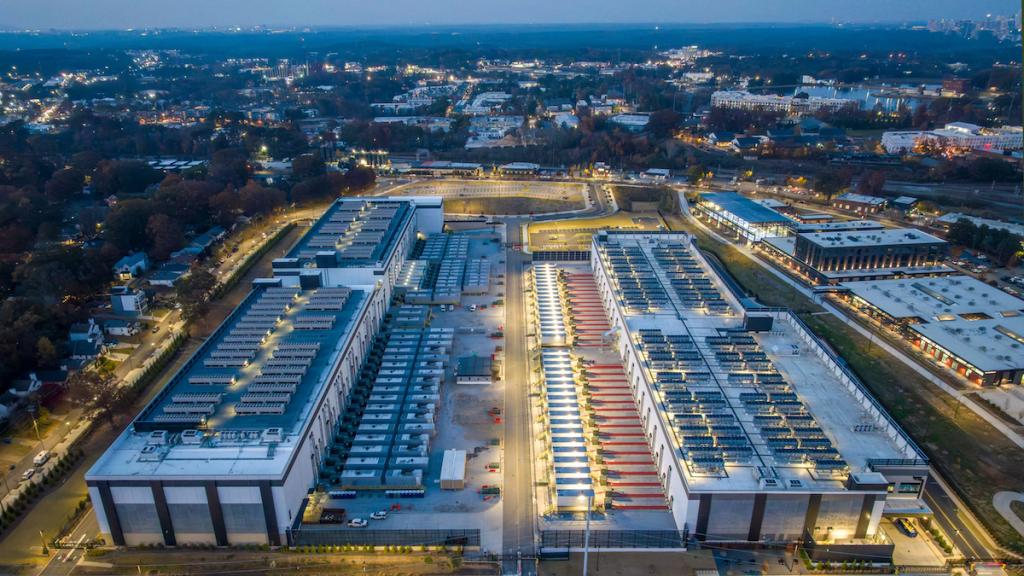
Photo Courtesy of ALAMY

There are still certain tasks that undeniably have a net-positive impact for business, with little downside or public repercussion. 

Whether creating an app or editing a website, coding has never been easier with the help of AI. Google Ads “AI Advisor” helps answer complex questions, like breaking down multi-faceted performance issues. Shopify AI can rapidly analyze POS, website and wholesale product sale data to develop strategic plans for restocks and pricing.

But in many of these instances, those tasks were done by humans in the past. Many of those human jobs are at risk.

As of mid-2026, artificial intelligence was explicitly cited in 87,714 US job cuts during the first five months of the year alone, according to layoff tracking data highlighted by CNBC. The Walt Disney Company laid off roughly 1,000 employees in April 2026, citing the need for a more “agile and technologically-enabled workforce”. 

And where jobs were not lost, work may have been stolen. As of March 2026, Harvard Magazine reported that more than 70 copyright infringement cases are currently caught up in US courts against AI tech companies.

And then there’s the tiny factor of our global environment. Data centers contribute to pumping water out of ancient underground aquifers faster than they can be refilled, competing with local residents for access to freshwater. Plus noise pollution, fossil fuel demands and more.

I – like many Americans – sit here and wonder, is it all worth it? 

Forced Micro-Steps Toward Containment

Many say this train has already left the station. In Mustafa Suleyman’s The Coming Wave, he explains many horrifying ways that AI could go wrong (especially in tandem with biotechnology). But he explains that it is immensely difficult to keep powerful general purpose technologies under human control (what he refers to as “containment”).

Most recently the EU has forced all of us in mass communications to pump the breaks with its own version of global containment. The European Union’s enforcement of Article 50 under the EU AI Act officially took effect on August 2, 2026, requiring global tech companies and platforms to visibly label and digitally watermark AI-generated text and images or face major fines of up to €15 million or 3% of their global annual revenue.

It has been a necessary time for contemplation and pause.

How I’m Adjusting My Clients’ SEO and Ad Strategies for 2027

As I’ve reflected on the past year’s experiments with AI, my own research, and my trip back to the Midwest, I’ve made some decisions on how I will adjust my client’s strategies, as they relate to AI, for 2027:

  • SEO strategy
    • In 2026, I focused on making my clients’ existing and new content more digestible for robots (robots.txt, schema markup, listicles, FAQs, etc.)
    • In 2027, I’ll be focusing on my clients’ human insights instead (especially in heavily content saturated industries like tourism)
      • I plan to use my journalistic training to interview my clients to gather more personal experience to inform their content
      • The challenge becomes how we tie in their personal experiences and human insights into what people are searching for or what people care about
    • I’ll also be performing regular “Sanity Checks” to prompt AI Answers for comparisons about my clients vs their competitors. If the response yields insights on how my client can better compete, I will recommend these changes.
    • In fields that are not yet oversaturated (such as local architecture), traditional SEO strategies will still perform.
  • Ads
    • I will continue using Google Ads’ AI-driven campaigns, such as Performance Max and Demand Gen, where AI helps inform which creatives perform best and on which channels, based on the setup goals.
    • I will NOT use AI for Meta Ads. I tried it briefly this year and was unsurprised that AI features did not assist in ad performance. I still feel these features have a long way to go and markedly perform worse. I will be toggling off!
    • I went back and forth on ChatGPT for a while. But in ads, any widely used, low competition space is worth pursuing. I am in the process of starting up a ChatGPT campaign for one of my clients now and look forward to reviewing its performance.
  • Content & Idea Generation
    • I remain incredibly cautious when using it for image generation or utilizing generative features for editing. I screenshot to avoid digital watermarks. I do this sparingly and only as a last resort.
    • I am working to ween myself off of AI generation for writing. I have been writing professionally for most of my life. I use AI now mostly only for writing social media captions, where the sheer volume dictates that less time be spent, as well as ads, where AI can shift through creative variations more efficiently than any human ever could. I will allow sufficient time for human text generation for web pages and blogs.
    • I always sit alone with a note pad and no technology while I am brainstorming any creative content: ad campaigns, social ideas, etc. While AI can help with writer’s block, I still feel that a blank slate and a free-flowing pencil are the best tools we have to come up with truly unique and human ideas.

AI vs. Human Content

Photo Courtesy of Tara Winstead

I chose to write this article with my own two human hands, keyboard finger-strike by keyboard finger-strike, without so much as a query of AI support.

Could I have done something more useful with the 4 hours I spent writing this? Will my human-written article perform even better than the one I could have swiftly produced from a bullet-point outline with the help of ChatGPT?

This blog is a bit rambling. Maybe not my best work. But it’s mine. It’s human. 

And despite every development, every new tool, every financial assurance, and every feeling we’ve all had about AI this year, it seems that we all still crave proof of humanity in the world.
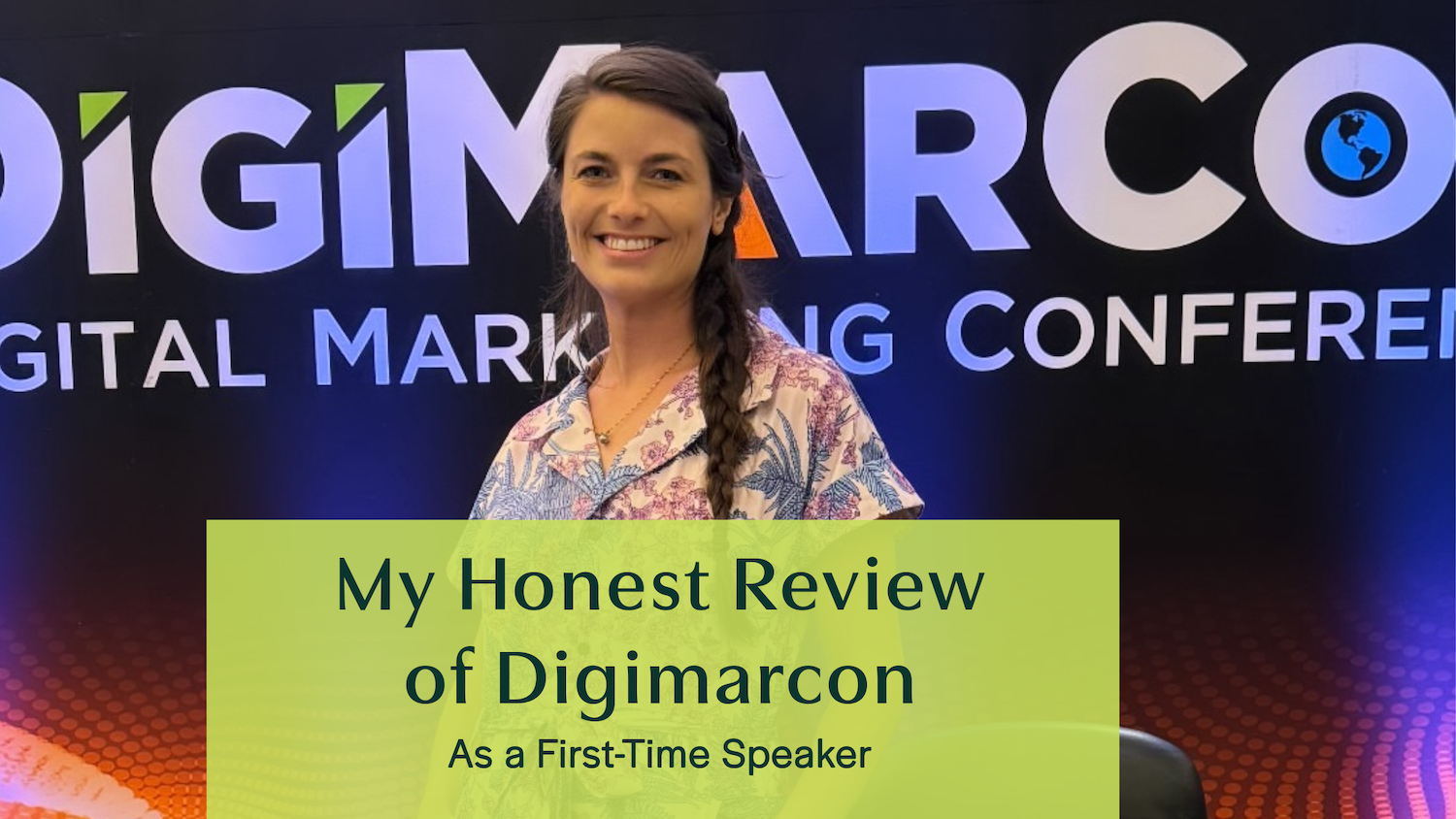
My Honest Review of DigiMarcon Honolulu: Behind the Scenes as a First-Time Speaker

honest review of digimarcon honolulu


Asa first-time speaker at DigiMarcon Honolulu in 2024, I’m sharing with you what the experience is like, the pros and cons, lessons learned, and what speakers and attendees should know before saying yes or booking tickets.

What is Digimarcon?

DigiMarcon is described on its website as the world’s largest Digital Marketing, Media & Advertising Conference & Exhibition Series, with over 40 events annually across more than a dozen countries. It is an event for gathering industry professionals to share strategies, emerging technologies, and marketing best practices.

DigiMarcon Hawaii (or Pacific) takes place in Honolulu, typically at the Hyatt Regency Waikīkī Beach Resort & Spa. It promises a packed two-day program of keynote speakers, real-world case studies, networking, and insights into AdTech, MarTech, SaaS, and more

Why I Participated (and What I Was Offered)

  • In July, 2024, I received the following LinkedIn message from a man named Ben at DigiMarcon:

    “We have an open speaking slot for our upcoming Hawaii conference on July 18 – 19, 2024, at the Hyatt Regency Waikiki Beach Resort & Spa. We’d love to invite you to join us as a solo speaker or panelist. We are pleased to offer you the following speaker package:

    • A session speaking slot on the main stage (not a breakout) focused on an approved digital marketing topic
    • A one-day VIP Speaker Pass granting full access to the event, meal & two complimentary drink tickets
    • A Media Partner Branding Package, which includes acknowledgment and your company logo displayed on our event website, app, and social media messages

    Please note that this is a complimentary speaker package with no cost involved. However, sponsorship requirements have been waived and it is a non-paid speaking engagement. You will be responsible for your own travel and accommodation arrangements if required. If you are interested in participating as a speaker, kindly send us your proposed presentation title and description (one paragraph) as soon as possible.

    To ensure relevance to our audience of senior marketing management professionals, all presentations must focus on digital marketing topics such as Content Marketing, Social Media Marketing, Video Marketing, Search Marketing, Mobile Marketing, Digital Strategy, or Marketing Automation. After looking over your proposed presentation title and description, we will send you a link to our online Speaker Agreement for you to make arrangements for finalization.

    Please let us know as soon as possible if you would be open to considering this opportunity. If you have any questions or concerns, feel free to contact me. We look forward to your response.”

Jonas brother at Digimarcon

My first thought was that it might not be a real conference. Or that it was spam.

But it was my first request for public speaking, which I was eager to do, so I looked into it. I googled DigiMarcon and DigiMarcon Honolulu to check out their websites. I learned that it was a global conference with events around the world. Some of the photos showed celebrities, such as Kevin Jonas from the Jonas brothers. Some events looked bigger and more successful than others.

After watching videos of past conferences and reading some reviews, I was convinced that it was a real conference. I didn’t recognize any of the current speakers listed for the Honolulu event. But speakers from other previous events included reps from Meta, Microsoft and other reputable agencies. Another sign that it was a legitimate event was that it was hosted at the Hyatt in Waikiki.

Still, the biggest sign that it wasn’t a successful event was that they were reaching out to me (a digital marketer who had no demonstrated track record with public speaking) and were not offering any payment. And they were reaching out with only 2 weeks’ notice asking me to prepare a 45-minute presentation.

Still, I figured it was worth the exposure, so I accepted and prepared my masterclass:

“Title: The Evolution of Google Ads: Demystifying Performance Max
Description: In my presentation, I will explore the evolution of Google Ads, emphasizing the shift from traditional Search Ads to the innovative AI-driven Performance Max campaigns. With accounts leveraging Performance Max experiencing an average 13% increase in conversions, the critical question is: are they always the optimal choice? We’ll delve into the distinctions between these campaign types, backed by real-world case studies, and provide actionable insights on when to utilize each for maximum impact. Join me to navigate the complexities of modern Google Ads and elevate your campaign strategies.”

Conference Day: What I Saw

Set-Up & Audience

The event looked professional: a manned check-in, tech support, banners, swag bags, and a speaker pass.

But attendance was sparse. There were maybe 30 people by my count on the day that I attended. I was surprised even that many real attendees had come, with conference tickets ranging from just under $500 to just under $1,000. Despite the low turnout, they were engaged, diverse in industry, and eager to learn.

Speakers & Atmosphere

I wasn’t alone in taking the opportunity for exposure. One speaker even had his daughter photographing him mid-presentation. But everyone truly delivered their best. Meg Hall, who presented before me, gave an engaging interactive presentation with a worksheet to help attendees determine what sets their brand apart and how to sell it, addressing pain points and problems solved. Topics ranged from SEO to branding and more, and attendees asked thoughtful questions.

My Session

When it came time to give my speech, I was a little nervous. I happened to be on crutches at the time due to a recently broken leg, so hobbling up onto the stage didn’t exactly make me feel a rush of confidence. But once I began, the nervousness faded. The audience was very attentive, especially to the bonus tip at the end, and many scribbled notes. The questions afterward were sharp and showed real attention. Watch the recording of my presentation here.

Networking

My personal favorite part of the event was the post-session cocktail hour. The food and drinkswere good. I connected genuinely with attendees, fellow speakers, and even walked away with a lead. For the speakers, the major value of the conference came in the conversations and networking, not the presentations.

The Video Letdown

We were filmed and told we’d receive recordings within a month, but they didn’t surface online until well over six months later, and I was never notified. That was very disappointing for me. 

2025: A Different Offer

This year, Ben reached out again, but with even less notice (less than a week). And the speaker package had been downgraded (no meals, drinks, or parking). 

So I respectfully declined, suggesting they reach out earlier next time.

Final Verdict: Is DigiMarcon Honolulu Worth It?

Pros:

  • It’s real.

  • Highly engaged audience.

  • Networking that turned into business opportunities.

  • A personal confidence-builder (and resume-builder).

Cons:

  • No payment

  • Heavy prep.

  • Late invitations.

  • Low turnout for a “main stage.”

  • Unrealiable video delivery.

How DigiMarcon Honolulu can improve

DigiMarcon needs better speaker management. Speakers should have one month’s notice, at a minimum. Ben is trying his best, but he is always late and slow to respond when help is needed. 

It is not marketed well. When I shared that I was invited to speak, no one I talked to in the digital marketing space had heard of the event.

This goes without saying, but paying their speakers and experts would lead to better speakers with greater expertise. At the very least, they should cover payment, meals and cocktail hour.

Who Might Benefit?

If you’re early in your speaking journey or aiming to build credibility, DigiMarcon Honolulu can be a worthwhile gamble, especially for the in-person connection and the “speaker” credential.

But if you’re experienced and your time is high-value, it’s probably not a good fit for you.

Allison Kronberg, owner of ALK Digital Marketing

Looking for a public speaker in digital marketing?

I love sharing my knowledge at networking events. Reach out today to inquire.

2025 Instagram Updates: Reposts, Friend Map, Friends Tab & Google Indexing (How Marketers Can Win)

2025 Instagram Updates Marketing Use Cases


Instagram shipped a stack of features in August 2025 that changed how content spreads, how friends influence discovery, and how brands can show up in Google Search.


Below, I break down what’s new, why it matters for business accounts, and step-by-step ways to turn each update into reach, insight, and ROI.

1) Reposts to Feed (with a dedicated “Reposts” tab)

Instagram Reposts

 Users can now repost public posts and reels directly to their own feed. Reposts live in a separate tab so followers can browse everything you’ve shared. About FacebookInstagram

Why marketers should care: Reposts create a built-in amplification loop. If you publish content that’s “repost-able,” you can earn secondary distribution from fans, partners, creators, and employees without ad spend.

How to use it:

  • Design for sharing: clean carousels, snackable tips, quote cards, checklists, and timely takes.

  • Ask for the repost: include a CTA in captions (“Repost if this helped”), especially for launches, UGC spotlights, contests, and community initiatives.

  • Create partner kits: pre-sized assets + caption starters for ambassadors and retail partners to repost quickly.

Measure it: Track repost volume, profile visits from reposts, and downstream follows/saves from those visits.

2) Friend Map (opt-in location sharing with friends)

What it is: Instagram added an optional map so people can share their location with selected friends, accessed from DMs. It’s off by default and requires explicit opt-in.

Why marketers should care: For local businesses (hospitality, venues, restaurants, attractions), location-tied content and events can spread through friend networks. If your content inspires visits, friends can discover your spot organically via the map and related reels.

How to Use it

  • Tie reels to place: clear geotags, recognizable exteriors/interiors, and “What to do/order/see”.

  • Promote friend-worthy moments: photo walls, tasting flights, and live music experiences people want to share with friends.

  • Publish time-bound hooks: “This weekend only,” “Happy hour 3 – 6 pm,” with location in the first 3 seconds of your reel.

    Note on privacy:
    This feature sparked safety and privacy debate. Keep CTAs respectful and avoid pressuring people to share live locations; focus on value and consent.

3) New Friends tab in Reels (Your Friends’ Activity)

What it is: A dedicated tab in Reels that surfaces content your friends liked, created, reposted, or commented on. It’s essentially a social signal firehose.

Why marketers should care: It’s a real-time trend radar. You can see what your community interacts with and calibrate your creative to match emerging formats, hooks, and sounds.

How to Use it

  • Weekly swipe-through: list trending hooks you see (“3 things I’d do differently…”, “POV: …”), then draft 2 to 3 riffs for your niche.

  • Save patterns, not just posts: opening two seconds, on-screen text style, camera framing, transitions, and CTA phrasing.

  • Build a “Friends-inspired” content bucket in your calendar and produce fast—trends have half-lives.

4) Instagram content gaining Google visibility (indexing of public posts)

Instagram in Google Search

What’s happening: Instagram has been expanding access for search engines to index public posts in more regions, which means your content can appear on Google for relevant queries. Multiple industry reports tracked the rollout through July 2025.

Practical translation: treating Instagram posts like mini landing pages (keywords, alt text, descriptive captions) can now pay off in traditional search.

How to Use it

    • Caption SEO: Put the primary keyword in the first 1 – 2 sentences; add 2 – 3 semantic variations naturally.

    • Alt text: Write human-readable descriptions that include the product/place/benefit keywords.

    • On-image text: Keep it legible; Google can interpret text in images. Clarity helps.

    • Entity cues: Use proper names (brand, product, city/neighborhood, venue) and consistent NAP on profile.

    • Link hubs: Add Link in Bio to route search traffic to relevant pages (product, menu, bookings).

    • Content clusters: Publish multiple posts around a topic (e.g., “Kaka‘ako brunch,” “Kaka‘ako coffee,” “Best brunch in Kaka‘ako”) to build topical relevance.

    (Background: Instagram’s help docs historically limited indexing, but reporting indicates broader access in 2025. So treat this as an opportunity and monitor your branded SERPs and Search Console “Discover” traffic.)

What Does the Google Antitrust Case Mean for Digital Marketing?

What Does the Google Antitrust Case Mean for Digital Marketing?


When someone wants to search for something, they often say, “I’ll Google it.” But that could change someday.


In August, a judge ruled that Google and its parent company, Alphabet, illegally operated a monopoly to dominate the search engine market. Google is expected to appeal.


Like many digital marketing experts, I heavily rely on Google products. Nearly all of my clients use at least one Google account. For most of them, Google — whether through organic traffic or paid ads — accounts for a significant portion of referred revenue. Daily, I log into Gmail, search via Google, review Google Analytics, run Google Ads, and optimize Google Business Profiles. And that’s not even considering Chrome, YouTube, Google Workspace, and more.


Naturally, I’ve been wondering: What does the Google Antitrust Case Mean for Digital Marketing when experts and their clients are so dependent on Google? I’ll explore that question in this blog.

A Quick Summary of the Google Antitrust Case

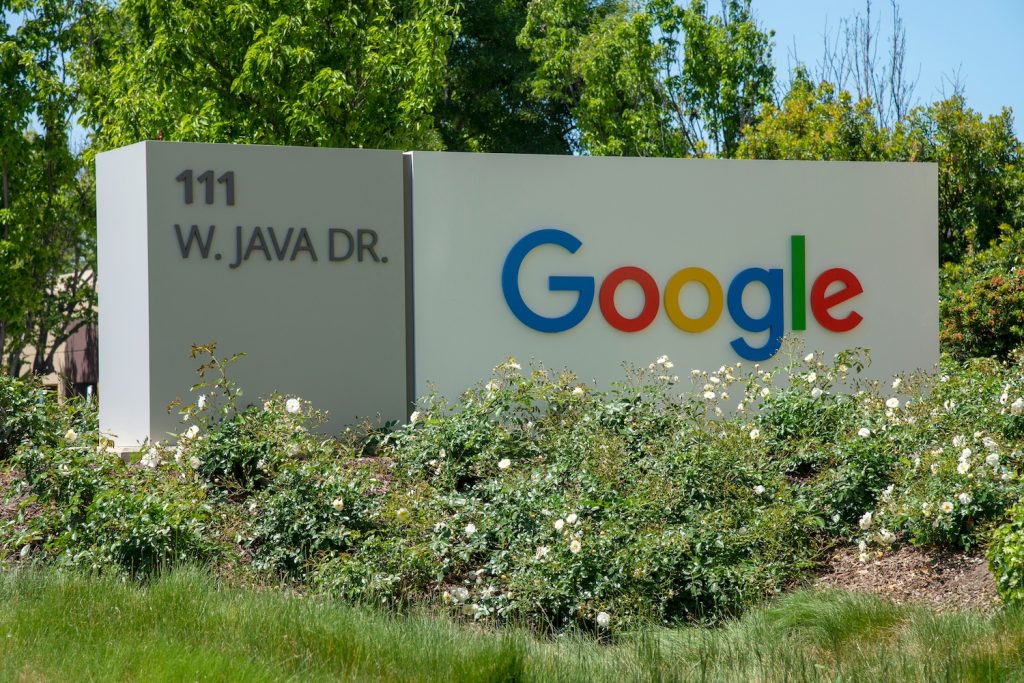
Google Sign

The landmark antitrust case against Google, filed by the U.S. government in 2020, alleged that the company maintained its dominance in the search market by creating strong barriers to entry and a feedback loop that sustained its monopoly, according to CNBC. 


Judge Amit Mehta ruled that Google violated antitrust laws by striking exclusive deals with device makers like Apple and Samsung. Google paid billions to ensure its search engine was the default on their phones and tablets. During the trial, it was revealed that Google paid companies, including Apple, over $26 billion in 2021 alone to remain the default search option in Safari. These deals allowed Google to build and maintain a monopoly while unfairly suppressing competition, according to Mehta’s ruling.


Some legal experts believe the court may require Google to end certain exclusive agreements.


What We Can Learn from the 1999 Microsoft Antitrust Case

Google’s case has drawn comparisons to the historic antitrust lawsuit against Microsoft in 1999.  According to the FTC, the U.S. Department of Justice accused Microsoft of using its monopoly power in the operating system and browser markets to stifle competition. By making it difficult to install competing software while bundling its Internet Explorer browser with Windows, Microsoft unlawfully maintained its dominance.


The DOJ initially sought to break Microsoft into separate companies, each focusing on different areas, like operating systems (Windows), software applications (Office), and internet services (MSN). However, Microsoft appealed, and in 2001, the case was settled. Microsoft agreed to stop tying products to Windows, share key software interfaces, and submit to years of government oversight.


The DOJ claims the Microsoft case paved the way for Apple — on the verge of bankruptcy at the time — to expand with its iTunes store and eventually launch its groundbreaking product, the iPod. The settlement also fostered an environment for innovation, crucial to Apple’s later success, including the development of iOS and macOS.


In fact, IBM’s 1969 antitrust case helped Microsoft emerge as a dominant player. Each tech antitrust case has ripple effects, often paving the way for startups to become industry leaders.


How Google’s Antitrust Case Could Impact the Digital Landscape

User works on laptop


Whether or not the court orders Google to end its exclusive search browser deals, other search engines that have long been on the sidelines may find new opportunities to innovate as Google faces increased scrutiny.


Yahoo, once the largest search engine, prides itself on a unique search experience. DuckDuckGo is known for its commitment to user privacy. Meanwhile, Bing stirred the industry by releasing one of the first widely used AI-powered search bots in February 2023.


There’s also room for growth in the AI search space. Google has introduced Gemini and AI overviews to compete with Microsoft Copilot (formerly Bing Chat), ChatGPT, and others. It’s a fast-moving competition with significant implications for how we find information in the future.


If other search engines or AI chatbots gain more prominence, it could lead to lower CPCs for search ads. However, it could also result in a more fragmented search landscape, making it harder for digital marketers to track and analyze data. With Google Analytics (GA4) and Google Search Console currently dominating traffic analytics, this could complicate the data.


How Digital Marketers Can Prepare

SEO Letters

When it comes to SEO and search advertising, stay agile. Continuously update your strategies to align with the latest search optimization guidelines, as the search landscape will continue to evolve — whether Google retains its dominance or not.

It may also be wise to create business listings across other platforms, similar to Google Business Profiles. Bing, for instance, uses Bing Places for Business, while DuckDuckGo sources business data from Apple Maps. If your budget allows, consider testing Bing or Yahoo search ads, especially if the market shifts. And don’t rule out the emergence of new advertising platforms.

Even if Google loses its search monopoly, many other search engines use similar algorithms. A well-optimized SEO strategy for Google should also perform well on other platforms. As AI continues to influence search, be ready for its potential impacts on the digital marketing landscape. 

Antitrust cases are meant to benefit businesses and consumers by fostering innovation and competition, as seen in both the Microsoft and IBM cases.


We can’t be certain of the outcome for Google, but change is undoubtedly coming to search. As digital marketers, we must stay prepared and embrace what comes next.